Manage your documents in D365 Where The Work Actually Happens
7 May 2026Microsoft Dynamics CRM is where housing work happens.
Tenant management, complaints, safeguarding, ASB, service interactions all of it lives in Dynamics. It is the system frontline teams rely on to do their jobs, under pressure, every day.
Yet in many housing organisations, document and records management still sits somewhere else: legacy EDRM tools, network file shares, SharePoint, or a fragmented mix of all three.
That separation creates an immediate problem. Staff are expected to manage information outside the system where the work actually happens. This forces application switching, breaks context, and introduces friction into already stretched workflows slowing teams down and weakening governance at the same time.
Organisations solving this haven’t done it through tighter controls or more training.
They’ve done it by embedding enterprise records management directly into Dynamics CRM, so documents are captured, governed, and retained as part of the work itself.
When records management lives in Dynamics, governance stops being something staff have to remember and starts being something the system does automatically.
The Real Problem Isn’t Compliance – It’s Friction
Frontline housing teams work in fast‑moving, reactive environments. They don’t lack awareness of governance obligations; they lack tolerance for unnecessary steps.
Housing officers shouldn’t have to stop mid‑case to think about where a document lives. No one should be asking “Where do I save this?” while dealing with a safeguarding issue.
When document management sits outside Dynamics, everyday work slows down:
- Switching between CRM, Outlook, SharePoint, and shared drives
- Downloading, renaming, and re‑uploading files
- Filing information retrospectively “when there’s time”
- Saving documents locally or in inboxes “just for now”
- Losing confidence in which version is correct
None of this adds value. It creates friction.
And friction inevitably leads to workarounds which lead to inconsistency, duplication, and risk.
Why In‑Place Document Management in Dynamics Matters
Embedding document and records management natively inside Dynamics CRM changes how work feels for users.
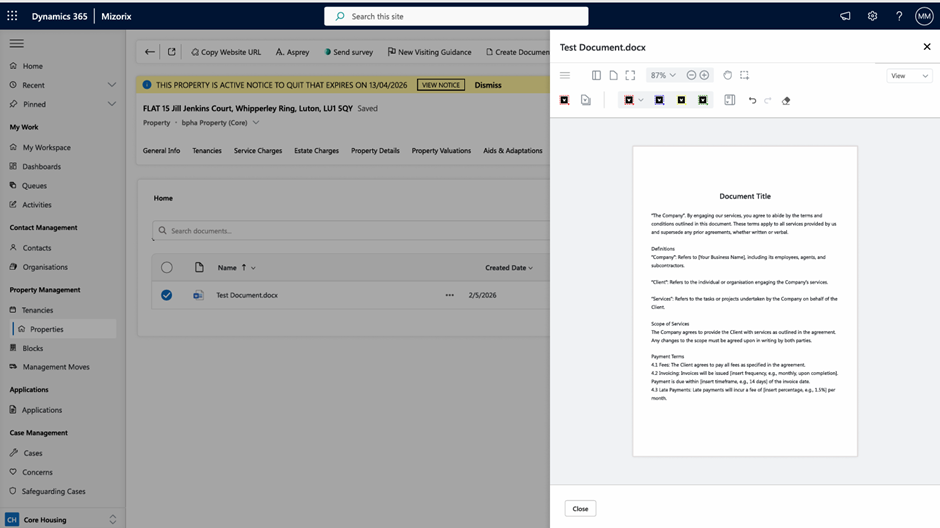
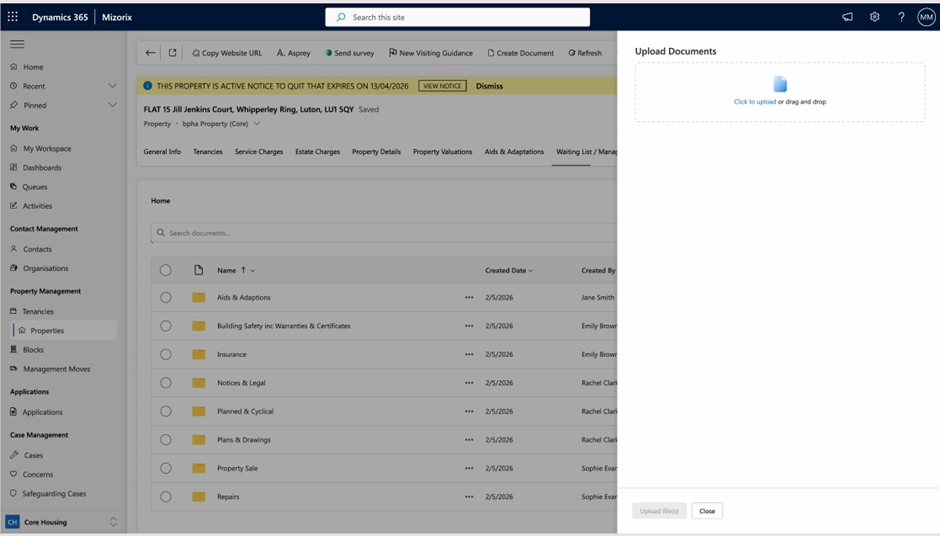
With Filer EDRM embedded directly into Dynamics:
- No application switching
- Documents are captured and viewed in the context of the tenant or case
- Filing isn’t a separate task – it happens as part of normal activity
- Information doesn’t need to be moved, copied, or reconciled later
Staff stay focused on the case in front of them while records are created, governed, and retained automatically in the background. Any governance model that relies on people pausing their work to file information correctly will eventually fail under operational pressure.
This isn’t just a technical enhancement.
It’s a fundamental user‑experience improvement that reduces cognitive load and speeds up case handling across the organisation.
One Trusted View – Without Leaving Dynamics
Housing work is contextual. Decisions depend on seeing correspondence, evidence, notes, and documents together.
When information is scattered across inboxes, drives, and disconnected systems, officers waste time searching, requesting access, or working with incomplete information.
With embedded EDRM:
- All documents and communications link directly to the Dynamics record
- Everything is visible in one place – tenant, case, complaint, or safeguarding
- Permissions follow Dynamics role‑based security automatically
The result is a single, trusted view of information, exactly where users expect to find it inside the system they already use.
Operational Efficiency First. Governance Follows.
When document management is embedded into daily workflows, consistency improves by design.
Because records are captured at the point of work, organisations benefit from:
- Accurate classification at creation
- Consistent metadata without manual effort
- Reduced duplication and rework
- Cleaner, more reliable information estates
Strong governance comes from removing opportunities for inconsistency altogether.
FOI, SAR, and Audit Readiness – Without the Scramble
FOI and Subject Access Requests are painful when information isn’t stored consistently or in context often under statutory deadlines and intense scrutiny.
With Filer EDRM embedded into Dynamics CRM:
- Records are already linked to the relevant case or resident
- Search results are complete and defensible
- Audit trails are generated automatically
Teams respond faster and with confidence without trawling multiple systems under statutory deadlines and personal accountability.
Protecting Sensitive Information by Design
Housing organisations manage highly sensitive data, from safeguarding and vulnerability records to personal correspondence.
Embedded EDRM ensures:
- Access controls follow Dynamics security roles
- Sensitive records remain protected without leaving operational workflows
- Declared records are immutable and fully auditable
The right people see the right information — without parallel systems or manual controls.
Lower Risk. Lower Cost. Better Use of Time.
Embedding records management directly into Dynamics CRM reduces long‑term overhead:
- Less reliance on shared drives and inboxes
- Reduced storage cost, sprawl and remediation effort
- Fewer compliance incidents and data risks
- More staff time spent supporting residents, not administration
In today’s financial climate, that efficiency matters as much as regulatory assurance.
A Better Foundation for Digital Housing Services
As housing providers modernise services and increase digital interaction, information volumes will only grow.
Embedding governance into Dynamics provides a scalable, future‑ready foundation that supports:
- Increasing case volumes
- New regulatory demands
- Organisation‑wide digital transformation
Without adding complexity for users.
Conclusion
Housing organisations don’t struggle with governance because they lack policies.
They struggle because governance is often designed outside the systems where work actually happens.
Frontline staff will always prioritise residents over records. That isn’t a failure of behaviour it’s the reality of housing work. Systems must be designed to support that reality, not fight against it.
By embedding enterprise document and records management natively into Dynamics CRM, housing organisations align governance with real workflows, remove friction for frontline teams, and achieve stronger compliance as a natural outcome not an enforced discipline.
The choice is no longer whether governance matters – it’s where governance is designed to live.
If you would like to discuss or learn more email: Kirsty.marsden@mizorix.com
You might also be interested in…
-
 29 July 2024
Embracing SharePoint: Significant Cost Savings and Streamlined Document Management
In 2024, we’ve witnessed a surge of projects to eliminate the substantial costs associated with third-party document management systems. Many…By Eva Luna-Rose -
 24 July 2024
Improving Legal Document Management with Filer
Legal firms handle a multitude of sensitive documents, case files, client contracts, and confidential communications. Efficient document management is critical…By Eva Luna-Rose -
 24 July 2024
Revolutionize Healthcare Document and Records Management with Filer
Healthcare providers face significant challenges in managing a multitude of documents, including patient records and regulatory documentation. The need to…By Eva Luna-Rose